Crypto Casino vs Traditional Casino: How to Choose Between Them

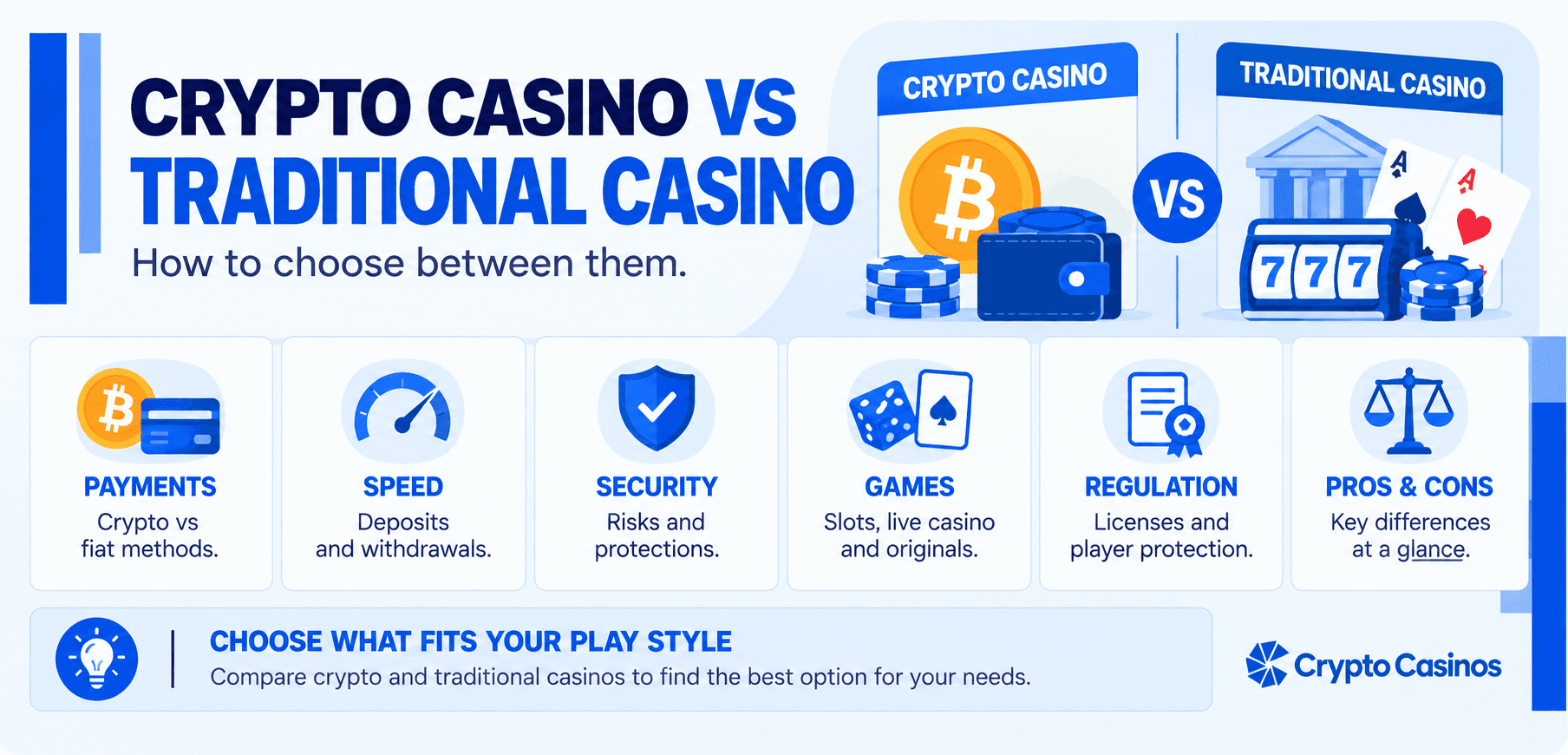
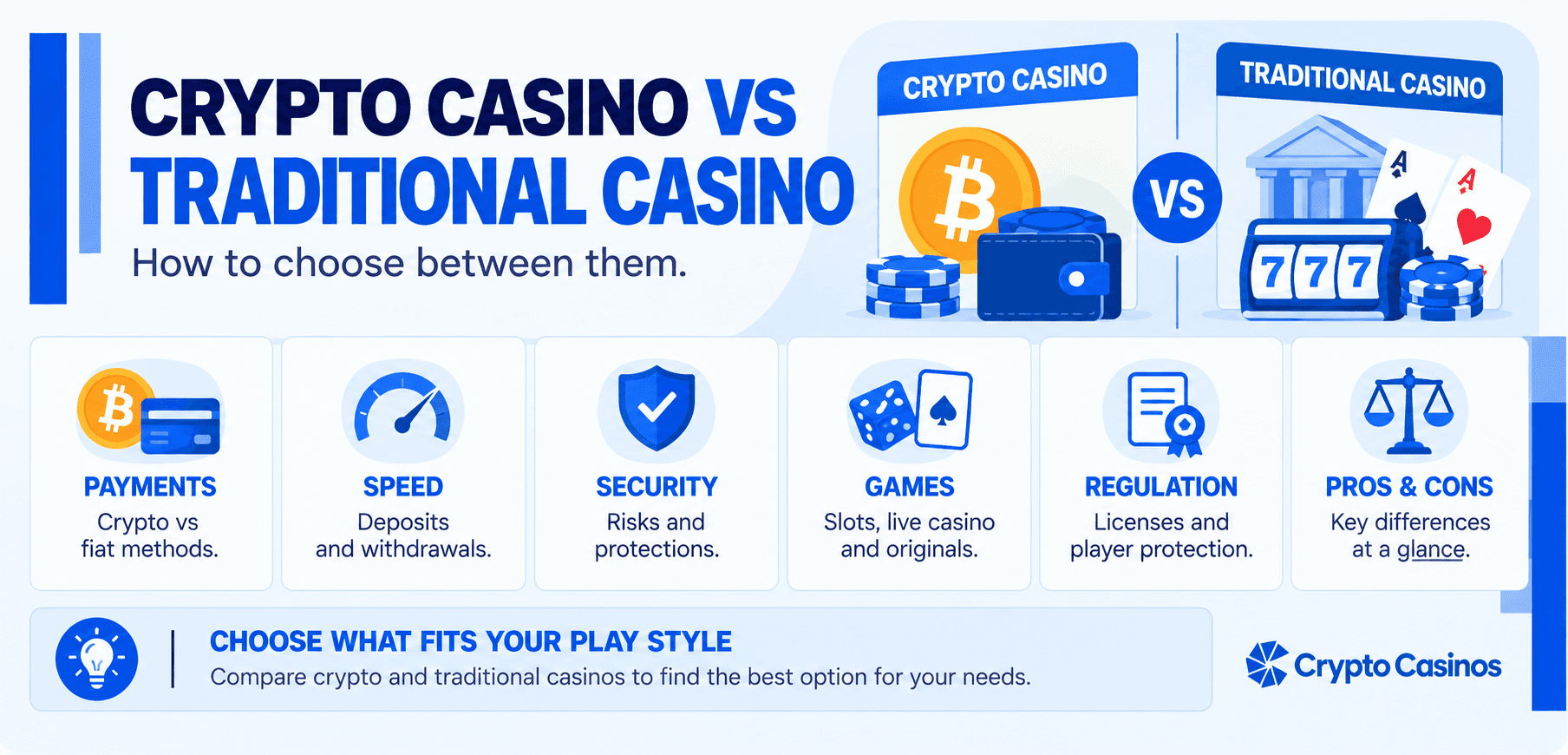
When comparing a crypto casino vs traditional casino, there’s more to consider than just how you make payments. From payment speeds and privacy to security, regulation, game fairness and player protection, each offers a different experience. In this guide, we break down their key differences and how they affect gameplay.
Crypto Casino vs Traditional Casino: The Short Answer
The key differences between crypto casinos and traditional fiat platforms are how you make transactions, manage your account and store your funds. Crypto casinos rely on digital funds for faster payments, lower fees and improved privacy. Traditional casinos use fiat payment methods with conventional verification processes that support chargebacks and reversals.
So, when it comes to crypto casino vs regular casino, which one is better? The short answer is neither. It all depends on your needs, preferences and playstyle. Crypto casinos generally appeal more to players who want crypto-specific features and fast transfers. On the other hand, traditional casinos might suit players who want familiar payment methods with more regulation.
The comparison is more complex, as you’ll see when we cover factors like payments, KYC, fees, game fairness, player control and protection. Each model has its own advantages and drawbacks that affect the overall gambling experience. Below are detailed comparisons to help you decide which option best matches your priorities.
Defining Crypto and Online Casinos
The main difference between crypto and fiat casinos is the payment method used. However, this also brings several underlying changes that affect gameplay and platform structure.
What is a Crypto Casino?
Crypto casinos are online gambling platforms that let you deposit, claim bonuses, gamble and withdraw using cryptos like Bitcoin (BTC), Ethereum (ETH), Tether (USDT), Litecoin (LTC) and others. Instead of funding your casino account through a bank or card, you fund it from your crypto wallet or a crypto exchange.
So, how do crypto casinos work? There are three types of crypto casinos based on their level of centralization:
- Centralized Crypto Casinos: These platforms operate similarly to fiat operators but accept crypto as a payment option. The operator manages all balances, withdrawals, games and processes, and users sign up with a typical casino account.
- Hybrid Crypto Casinos: Also known as Web3 casinos, these offer decentralization by combining traditional casino infrastructure with added blockchain features. Operators usually manage balances and accounts centrally but use smart contracts, on-chain transfers and wallet connections for specific functions.
- Decentralized Casinos: Fully decentralized Web3 casinos or dApps that use smart contracts and blockchain networks to handle all core functions without a centralized operator. Players can connect with non-custodial wallets directly to the dApp, and all payouts, bets and settlements are processed independently on-chain.
What is a Traditional Online Casino?
Traditional online casinos accept fiat currencies such as USD or EUR for all payments. Players fund accounts via e-wallets, bank transfers and cards, and all transactions go through centralized payment processors. These casinos almost always require identity verification on the casino side and for most payments.
Most traditional casinos are centralized, and operators manage all essential functions. Payment operators and banks process payments and can see all transactions.

“I see crypto and fiat casinos as similar at their core, with payment methods being the main difference. However, blockchain technology allows crypto casinos to go beyond payments, introducing features like decentralization, self-custody and governance.”
Crypto Casino vs Traditional Casino: Payments, Speed & Fees
How you store and move money is one of the biggest practical differences between these casino types. Here’s how they compare across key factors related to payments:
Payment Methods
When matching up a crypto casino vs a traditional casino, the available payment methods are instantly noticeable. Traditional operators support fiat payments through methods like bank wire transfers, card payments, e-wallets and mobile payments. They support government-backed currencies like USD, EUR, GBP and CAD with a stable value.
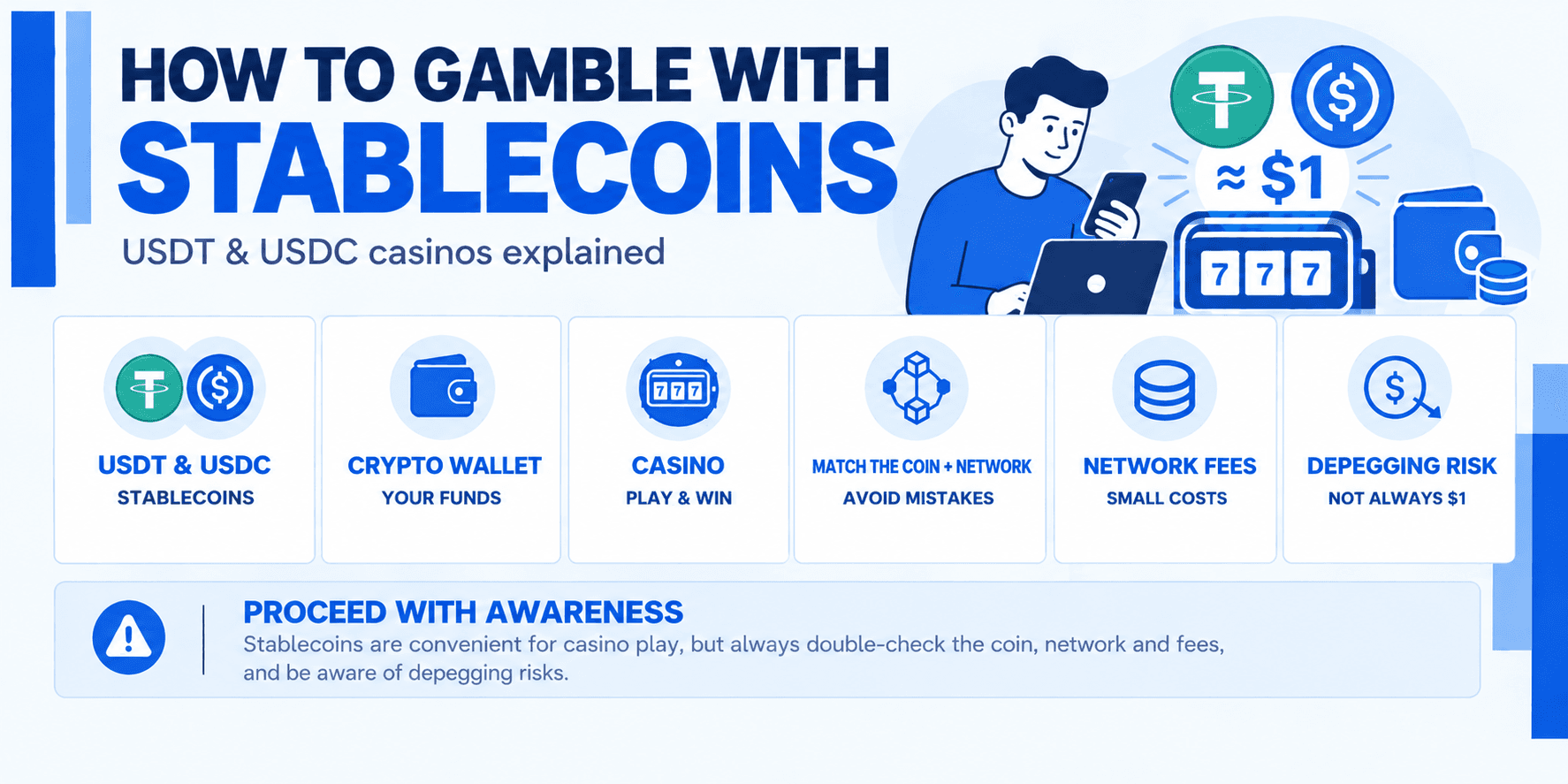
Crypto casinos primarily support wallet-to-wallet transfers with coins like BTC, TRX, ETH, DOGE and SOL. Most cryptocurrencies are volatile, meaning their market value can rise or fall significantly while you hold them. Stablecoins like USDT and USDC reduce this risk by maintaining a value pegged to fiat currencies such as the US dollar.
Crypto blockchain transactions are generally irreversible once confirmed, while fiat payments allow reversals and chargebacks. Although cryptos don’t carry chargeback risk for operators, players have no recourse if they send funds to the wrong address.
Deposit & Withdrawal Speed
Crypto deposits usually arrive within a couple of seconds to 30 minutes, depending on the coin and blockchain used. For example, TRON and Solana transfers can confirm in just a couple of seconds, while Bitcoin deposits can take up to 30 minutes. Crypto withdrawals usually complete within 10 to 60 minutes after the casino processes them.
Fiat deposits are instant with cards and e-wallets, while bank transfers can take up to three days due to processing and security checks. Withdrawals are generally slower, as card and bank payouts usually take 1 to 5 days. Both are subject to KYC checks on the casino’s side, but fiat payments are also verified by the payment operator, which can extend processing time.
Transaction Fees
Every crypto transaction has a blockchain network fee ranging from a couple of cents up to a couple of dollars, depending on the coin, congestion and network. Most new crypto casinos don’t charge any additional transfer fees on crypto transactions, making them really affordable. With careful coin and network choice, you can make consistent transfers with really low fees.
Fiat payment fees depend on the payment method and currency conversion. Casinos often charge no fees for card or e-wallet transfers, but banks and payment providers may add fees. These can add up to roughly 1–3% of the amount, or more, for international deposits and withdrawals.
Fund Storage & Custody
At typical centralized casinos, the money you deposit is credited to your casino account balance, and the operator controls it until you withdraw it. The principle is the same whether it’s a crypto or a fiat casino. However, fully decentralized Web3 casinos let you connect non-custodial wallets without transferring balances. These are called no-account casinos.
In practice, this means that every bet you make can trigger an on-chain crypto transaction. On some other platforms, you may need to allocate funds to smart contracts to handle subsequent bets and payouts automatically. This gives players full custody over their funds and control over how they’re handled.
Privacy, KYC and Anonymity Considerations
When comparing crypto casino vs traditional casino privacy, the main differences come down to KYC, transaction tracking and casino data collection. Here’s what you need to know.
Identity Verification & KYC
KYC verifications usually require submitting a valid government ID, proof of address and even financial documents. Fiat online casinos typically collect personal information during registration and require verification before allowing withdrawals. In some cases, casinos require verification even for your first deposit.
Crypto casinos usually allow players to register, play and withdraw with just an email address. However, you will eventually need to complete KYC verification once you reach specific thresholds. Still, some true no-KYC crypto casinos will never require verification.
Privacy & Transaction Tracking
Fiat payments involve banks and payment operators that keep records and review every payment, especially gambling payments. Traditional casinos also store personal information, payment details and betting history.
Crypto operators usually require less personal information, and blockchain transactions give more privacy. Still, this doesn’t mean they are fully anonymous, as public networks like Ethereum or Bitcoin record crypto wallet addresses, transfers and amounts that can be tracked.
Can Crypto Casinos be Truly Anonymous
Decentralized casinos (Web3) allow anonymity, as players can connect with non-custodial wallets without creating casino accounts. Although most of your information remains private, wallet connections don't guarantee full privacy, especially when you make publicly visible blockchain transfers.
At the same time, even at a no-KYC casino, that doesn’t mean there’s no monitoring. Casinos can still monitor payments, player behavior and betting history to ensure there’s no misuse of their platforms.
Regulation, Licensing and Player Protection
The crypto casino vs traditional casino debate wouldn’t be complete without talking about regulation, as it affects player rights, dispute resolution, fund protection and overall safety. Both types of casinos can have a gambling license, but regulatory oversight differs by jurisdiction.
Traditional online casinos usually operate under established regulators like the Malta Gaming Authority and the UK Gambling Commission. Regulators enforce requirements on game fairness, operator conduct and responsible gambling. Casinos must comply with these standards to keep their licenses.
Crypto casinos commonly operate under offshore licenses like Anjouan and Curaçao. Enforcement standards and licensing requirements vary, and some platforms operate without a license. In most cases, these are no-KYC casinos, as regulators almost always require customer verification.
Online casinos licensed by established regulators typically must provide transparent terms, formal complaint procedures and responsible gambling tools. For example, all casinos licensed by the MGA must provide access to alternative dispute resolution services for player complaints. With these mechanisms, you as a player have another option for dealing with disputes of any kind.
Offshore-licensed crypto casinos can have fewer safeguards, especially when there’s no independent dispute resolution authority. In other words, players often handle disputes directly with the casino. Recovering funds is also harder because crypto payments are irreversible.
Crypto gambling can be legal or illegal depending on your local laws. However, in most jurisdictions, these platforms operate in a legal gray area because gambling laws don't address crypto payments. Still, just because a casino has a valid offshore license doesn't mean it’s legal in your area or that it accepts players from all over the world.
Before you register, check your local laws and whether crypto payments or online gambling are banned. Then check the casino’s T&Cs to confirm it accepts players from your country. You can always contact live chat support to confirm whether you’re allowed to play.

“My recommendation is to prioritize casinos with a verifiable license and a proven payout track record. Yes, big and flashy bonuses can be enticing, but in my experience, they aren’t any good if you can’t reliably withdraw your winnings.”
Crypto Casino vs Online Casino: Games & Fairness
When comparing crypto casinos to traditional casinos, you’ll usually find the same types of games. The most common games include slots, live casino games, table games like poker, baccarat, or roulette and arcade games like crash, plinko, etc. The key difference is how these games operate and what systems power them.
RNG Casino Games
RNG games use a random number generator or a built-in mathematical system to determine game outcomes. Both crypto casinos and traditional casinos offer these games through trusted software providers. Developers and independent test labs like GLI or eCOGRA test RNG systems to ensure they produce truly random results.
Provably Fair Casino Games
Provably fair games use cryptographic algorithms that allow players to verify game outcomes themselves. They combine multiple inputs, including the server seed, client seed and nonce, to generate results. This technology is almost always available at crypto casinos, while typical online operators usually don’t have provably fair gambling titles.
“One common misconception I see among players who prefer provably fair games is that they offer better chances of winning. However, these games still have a built-in house edge and RTP, which vary by title. The system lets you verify game results. It doesn't improve your odds or favor players.”
Traditional and Crypto Casino Advantages and Disadvantages
Both crypto and traditional casinos have their pros and cons. Here’s how they affect your experience:
Pros & Cons of Crypto Casinos
Privacy: You can register with just an email address at most crypto casinos
Faster Payments: Deposits and withdrawals arrive within minutes after the casino approves them
Low Fees: Most crypto casinos don’t charge fees, and you’ll only pay blockchain fees
Provably Fair Games: Crypto casinos usually have provably fair games that let you verify results yourself
Anonymity: Some crypto casinos are no-KYC, and decentralized platforms let you play while sharing minimal personal information
Crypto Volatility: Your balance can gain or lose value during gameplay unless you use stablecoins
Irreversible Transactions: Sending funds to the wrong address or using the wrong network can lead to permanent losses
Limited Recourse: Recovering funds or handling disputes involving offshore casinos is more difficult
Technical Complexity: Using crypto wallets and blockchain networks requires additional knowledge
Pros & Cons of Traditional Online Casinos
Payment Reversals: Some transactions can be reversed through payment providers
Stable Balance: All your account funds retain nominal fiat value
Player Protection: Stronger regulators provide independent complaint and dispute resolution
Easier Transfers: You can use your card, bank or e-wallet just like with all other payments
Slow Withdrawals: Bank and card withdrawals can sometimes take several days
Payment Blocks: Banks or payment operators can decline gambling transfers
Extensive KYC: Identity checks are common, especially during withdrawals
Less Privacy: All gambling transactions will appear in your financial records
Bitcoin Casino vs Traditional Casino: Which Is Better for You?
In the battle of crypto casinos vs traditional casinos, there’s no clear winner. It’s all about choosing the right option for your playstyle. Here are some tips to help you understand which one might be better for you:
Choose a Bitcoin Casino if:
- Your priority is faster transactions with lower fees and a smaller financial footprint
- You prefer more privacy overall when gambling online
- You’re comfortable with crypto volatility or prefer using stablecoins
- You want more control over your assets and don’t have issues with using crypto
- You want broader access to international sites that aren’t blocked because of payment processors
Choose a Traditional Online Casino if:
- You want a more centralized service with clear dispute procedures
- You only trust locally regulated licensing organizations
- You prefer fiat payments and don't mind longer transfers and more security checks
- You don’t use crypto and aren't interested in setting up a crypto wallet
“I always remind players that neither Bitcoin nor typical online casinos eliminate gambling risks. No matter which option you choose, it’s easy to lose track of your spending and make impulsive deposits. I recommend setting strict deposit limits and a gambling budget, and sticking to it to avoid overspending.”
FAQs: Crypto Casino vs Traditional Casino
Are crypto casinos legit?
Do crypto casinos have better odds than traditional gambling sites?
Do I have to pay taxes on crypto casino winnings?

Vladimir is a senior iGaming writer and editor, adept at breaking down the key details of crypto casinos and sportsbooks so players don’t have to, delivering honest, player-focused information that actually matters.