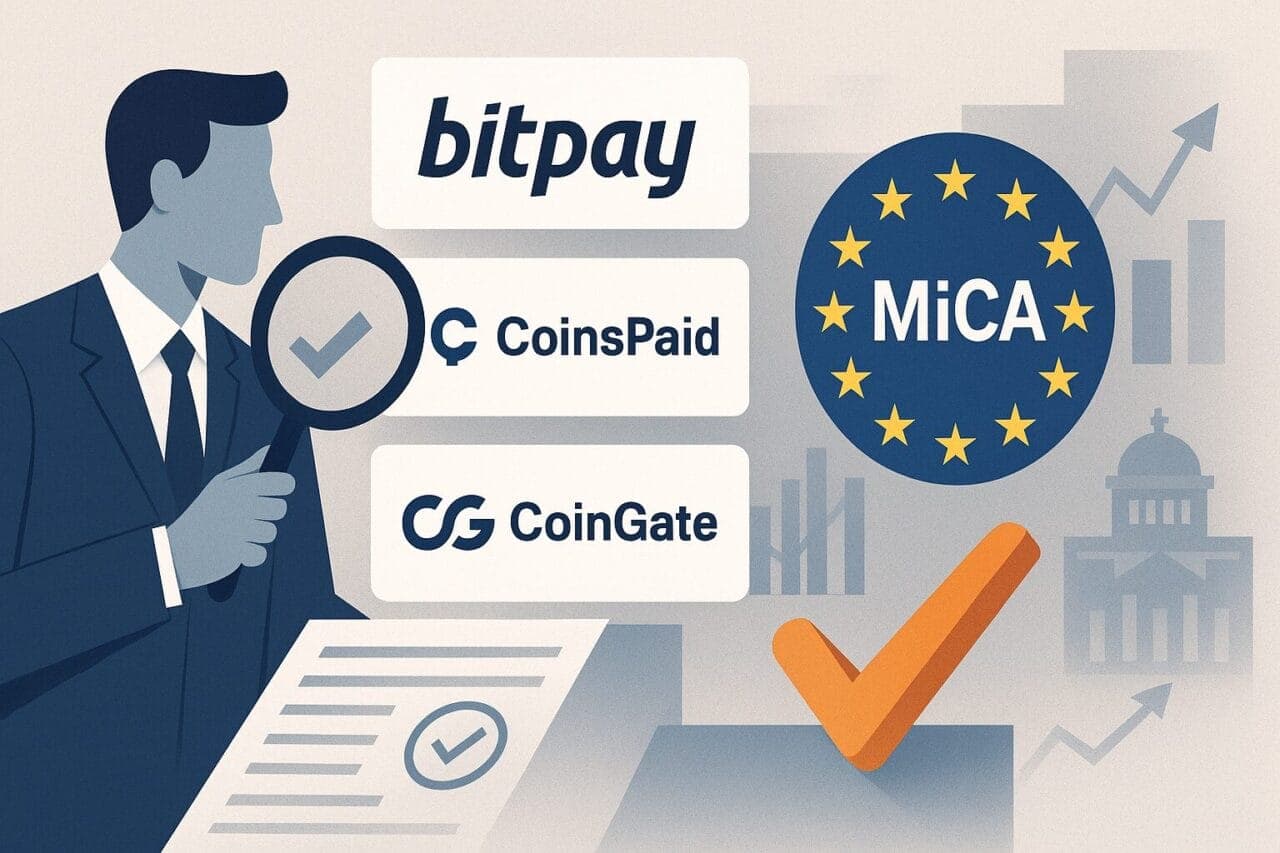
Of the three major crypto payment processors serving the online casino and merchant sectors: BitPay, CoinsPaid, and CoinGate, only CoinGate has achieved compliance with the European Union’s Markets in Crypto-Assets (MiCA) framework as of 2026. The distinction carries significant implications for iGaming operators in EU jurisdictions, where partnering with a MiCA-compliant processor is becoming a regulatory necessity.
The European Union’s Markets in Crypto-Assets (MiCA) regulation has reshaped how crypto payment processors operate across the bloc. We examined three of the most prominent providers serving the casino and merchant space, including BitPay, CoinsPaid, and CoinGate, to assess where each stands under the new framework.
MiCA Compliance Matters for Casino Operators
MiCA established a unified regulatory structure for crypto-asset service providers across EU member states. For online casinos and iGaming platforms that accept cryptocurrency deposits and withdrawals, partnering with a MiCA-compliant payment processor is no longer optional. It is a baseline requirement for legal operation within the EU.
Of the three processors we examined, only CoinGate has cleared MiCA’s compliance requirements as of 2026. This creates a meaningful competitive gap and raises questions for operators currently relying on non-compliant providers.
BitPay: Established but Facing Regulatory Hurdles
BitPay is one of the oldest crypto payment processors in the industry, having launched in 2011. The Atlanta-based company processes payments in Bitcoin, Ethereum, Litecoin, and several other cryptocurrencies. It has built a strong reputation in the retail and e-commerce sectors.
However, BitPay has not yet obtained MiCA clearance. For EU-facing casino operators, this presents a real challenge. Without MiCA compliance, platforms using BitPay for European transactions may face regulatory scrutiny or need to find alternative solutions for that market.
BitPay’s strength lies in its longevity and brand recognition. But regulatory standing is a different measure, and on that front, BitPay currently falls short for EU casino use cases.
CoinsPaid: Large Transaction Volume, No MiCA Clearance
CoinsPaid has positioned itself as a leading crypto payment gateway for the iGaming industry. The processor reports that it handles a significant share of crypto gambling transactions globally and supports more than 20 cryptocurrencies.
Despite its strong footprint in the casino sector, CoinsPaid has not secured MiCA compliance. This gap could affect partnerships with EU-licensed operators who must demonstrate full regulatory alignment across their payment infrastructure.
CoinsPaid has also faced additional challenges in recent years, including a reported security breach that resulted in the loss of funds. That incident adds another layer of concern for operators evaluating long-term payment partnerships.
CoinGate: The Only MiCA-Compliant Option Among the Three
CoinGate, headquartered in Vilnius, Lithuania, is the only of the three processors to have achieved MiCA compliance. The company supports over 70 cryptocurrencies and offers payment processing, invoicing, and point-of-sale solutions for merchants and online platforms.
CoinGate’s MiCA clearance gives it a clear regulatory advantage in the EU market. For casino operators holding licenses from EU regulators such as the Malta Gaming Authority, as well as authorities in Estonia and Lithuania, CoinGate offers a compliant option for crypto payment processing.
CoinGate’s Lithuanian base also provides a geographic advantage. Lithuania has been one of the more proactive EU member states in implementing MiCA requirements, giving locally headquartered companies a head start in the compliance process.
That said, MiCA compliance alone does not make CoinGate the right fit for every operator. Evaluating factors such as supported currencies, transaction fees, settlement speed, and integration complexity, alongside regulatory status, is recommended.
What This Means for Casino Operators
The divergence in regulatory status among these three processors carries practical consequences. EU-licensed casinos that continue using non-MiCA-compliant payment providers risk penalties, license conditions, or operational restrictions.
Operators should review their payment processing agreements in light of MiCA requirements.