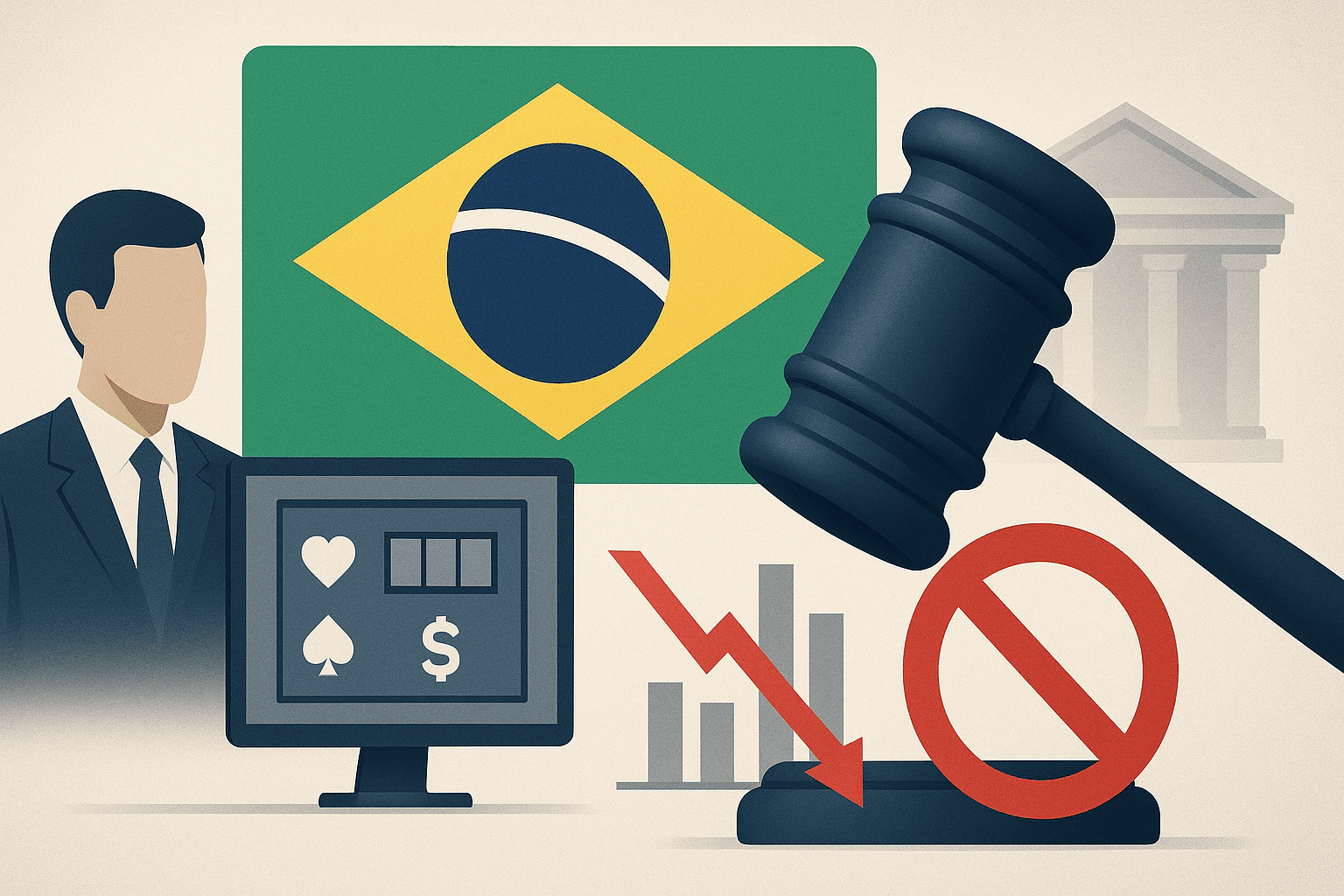
Brazil has banned all sports betting and online casino games effective immediately after President Luiz Inácio Lula da Silva signed Provisional Measure 1,394 on Sept. 25, 2026, nine days before the first round of the country’s presidential election. The 85 licensed operators, who paid a combined $492 million for five-year licenses, will receive no refunds. A companion bill sent to Congress would criminalize processing betting payments, including through cryptocurrency.
Brazil prohibited all sports betting and online casino games on Sept. 25, 2026, nine days before the first round of its presidential election, Bitcoin News first reported. President Luiz Inácio Lula da Silva signed Provisional Measure 1,394, which was published in an extra edition of the official gazette that evening and took effect immediately.
The measure ends a licensed market that opened in January 2025. According to Bitcoin News, the government granted 85 licenses at the cost of $5.8 million each, totaling approximately $492 million (R$2.55 billion). Operators will receive no refund or compensation.
What the Ban Covers
Provisional Measure 1,394 prohibits the operation, offering, intermediation and advertising of all fixed-odds betting in Brazil. The scope covers both real sporting events and online casino games, and it extends to operators based abroad that serve customers in Brazil.
State-level betting concessions are also terminated. Other lotteries authorized by law remain exempt. Finance Minister Dario Durigan presented the measure at a ceremony in São Paulo where Lula signed it, Bitcoin News reported.
Timeline for Shutting Down
New deposits were barred from the moment of publication. Bettors have until 11:59 p.m. on Oct. 5 to withdraw their balances. Licensed sites and apps must go offline at midnight on Oct. 6.
Bets not settled by that deadline are void and must be refunded in full. Operators then have two days to send each customer’s balance to the customer’s bank, identified by taxpayer number (CPF). Banks have seven days, Oct. 9 through Oct. 14, to return the money, with state-owned bank Caixa Econômica Federal handling anything third-party institutions cannot return.
Operators that miss those obligations face a fine of $38,600 (R$200,000) per day. The licenses, notionally granted for five years, expire 30 days after publication on Oct. 25. Pending applications are void.
Advertising and Enforcement
All betting advertising and sponsorship must be removed within 10 days. Internet platforms have a legal duty to prevent betting content from circulating, and app stores and operating systems must block banned apps.
Penalties range from warnings to fines of up to 10% of a group’s Brazilian revenue. Suspension is possible for repeat offenders.
Companion Bill Targets Crypto Payments
The provisional measure itself does not mention cryptocurrency. However, a companion bill Lula sent to Congress the same day would criminalize processing, settling or intermediating betting payments “including through virtual assets,” according to the Justice Ministry.
The proposed penalty is two to four years of imprisonment, with a harsher sentence for concealing the origin of funds. The bill still requires approval by both houses of Congress, and its full text had not yet been published in the Chamber of Deputies’ register at the time of reporting.
Under the new framework, seized funds are declared forfeited through an administrative proceeding rather than requiring a prior court ruling. Seized monies are directed to the National Public Security Fund.
If the companion bill passes, it could set a precedent for how other countries treat crypto-based gambling transactions. Players who used Bitcoin or other cryptocurrencies to deposit with Brazilian-licensed operators should move quickly to withdraw any remaining balances before the Oct. 5 deadline.
Industry Response
The National Association of Games and Lotteries (ANJL) criticized the decision and said it was taking legal action to overturn the provisional measure. The association estimates the ban could result in around R$9 billion ($1.7 billion) in lost industry investment through 2029, including spending on advertising, influencers and sports sponsorships.
ANJL President Plínio Lemos Jorge also argued that potential compensation claims could extend beyond the R$30 million operators paid for each five-year license to investments made after Brazil established its regulated betting market.
The dispute has already reached Brazil’s Supreme Federal Court (STF). On Sept. 28, ANJL and the Brazilian Institute of Responsible Gaming (IBJR) asked the court to suspend the measure, arguing that its abrupt introduction caused substantial losses to companies that had invested under the existing regulatory framework.
Brazil’s Attorney General’s Office subsequently requested 72 hours to respond to the legal challenges. The ban remains in effect while the challenges are considered, meaning operators are still working toward the Oct. 6 shutdown deadline.