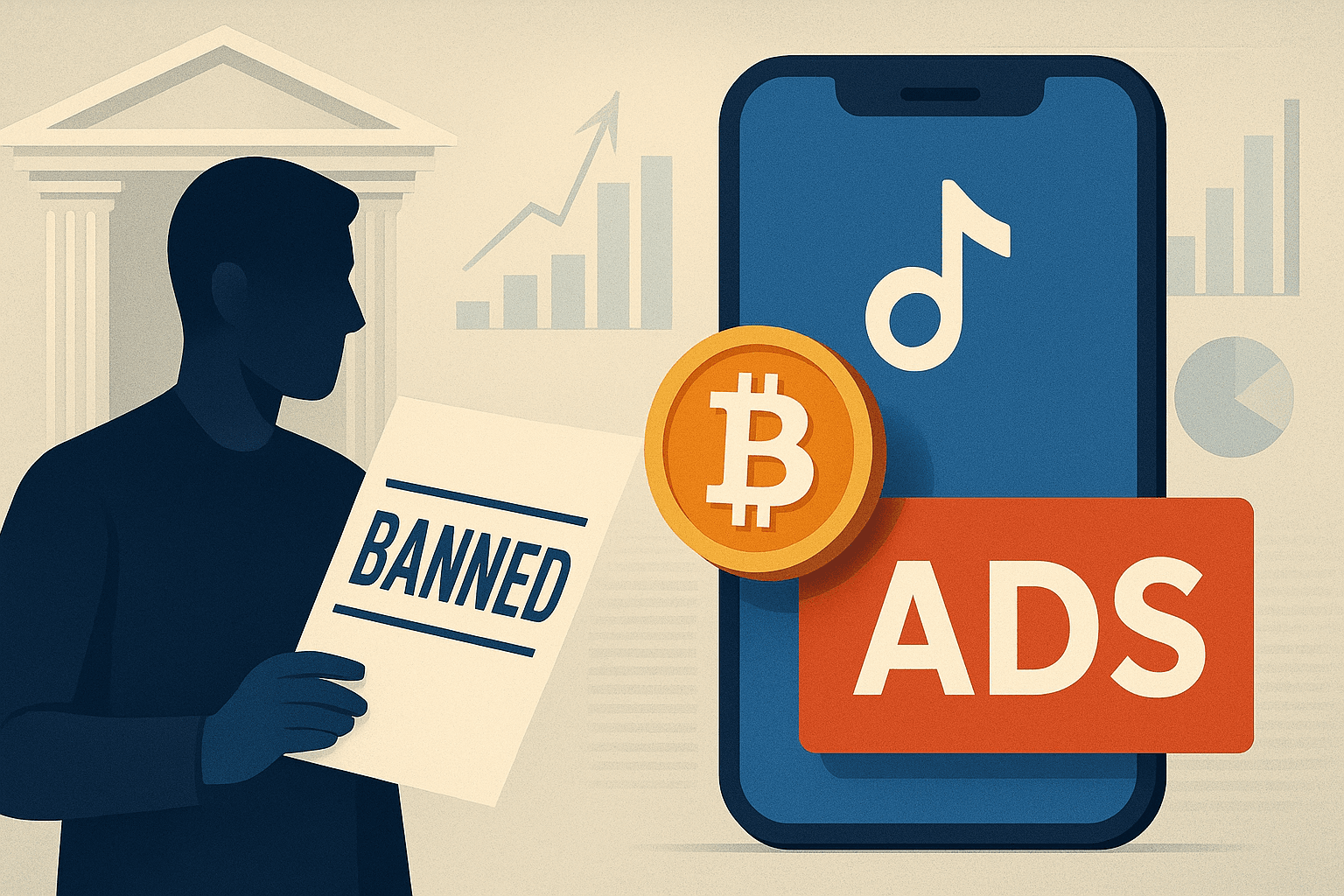
TikTok has permanently removed an ethical gambling advocate from its platform even as promotional content for unregulated cryptocurrency casinos continues to circulate freely. The move raises pointed questions about the social media giant’s content moderation priorities, particularly given its large user base of minors and young adults.
The platform’s decision to permanently ban a creator focused on responsible gambling education stands in stark contrast to its handling of crypto casino promotions. Content marketing for unregulated gambling platforms remains widely available on TikTok, even as the company takes strict action against voices advocating for player protection and gambling harm awareness.
This disparity highlights a growing tension in how social media platforms police gambling content. Creators who warn audiences about the risks of online gambling and promote responsible play appear to face harsher enforcement than those actively directing users toward crypto casino platforms. Many of those platforms operate outside traditional regulatory frameworks.
Crypto Casino Content Spreads Across Social Media
Cryptocurrency casinos have expanded their marketing reach across social media in recent years. These operators frequently leverage influencer partnerships and affiliate marketing to reach younger demographics. TikTok’s algorithm-driven content delivery system makes it a particularly effective channel for this type of promotion, as short-form videos can reach millions of users rapidly.
We found that many crypto casino promotions on TikTok do not carry the responsible gambling disclosures that regulated operators are typically required to display. The lack of consistent enforcement against these promotions raises concerns among harm-reduction advocates and regulators alike.
TikTok’s community guidelines prohibit content that promotes gambling services, yet enforcement appears inconsistent. The permanent ban of an advocate focused on ethical gambling practices suggests the platform’s automated moderation systems may not distinguish between content that promotes gambling and content that discusses it from a harm-prevention perspective.
Social media platforms have faced repeated criticism for their handling of gambling content. Several have struggled to balance free expression with consumer protection, particularly when algorithmic systems drive moderation decisions at scale.
The Broader Regulatory Landscape
The incident comes at a time when regulators around the world are increasing their focus on gambling advertising in digital spaces. Several jurisdictions have introduced or proposed restrictions on gambling promotions targeting younger audiences through social media.
Crypto casinos present a particular challenge for regulators because many operate without licenses from established gambling authorities. Their use of cryptocurrency for deposits and withdrawals can make it harder for regulators to track activity and enforce compliance with advertising standards.
Implications for Gambling Content Creators
The ban sends a concerning signal to creators who produce educational content about gambling risks. If platforms treat harm-reduction content the same as or more harshly than gambling promotions, advocates may lose access to the audiences who need their messages most.
The gambling harm-reduction community has responded with frustration, viewing the ban as counterproductive to public health goals. Several creators in the space have expressed concern that they could face similar action for discussing gambling-related topics, even from an educational standpoint.
A Call for Clearer Policies
The situation underscores the need for social media platforms to develop more nuanced content moderation policies around gambling. Distinguishing between promotional gambling content and educational or harm-reduction material would allow platforms to protect users from predatory marketing while preserving space for responsible advocacy.
Until platforms like TikTok refine their approach, the current imbalance where crypto casino promotions thrive and ethical advocates face bans is likely to remain a point of contention among regulators, public health organizations and the gambling industry.