
How to Gamble With Stablecoins at Online Casinos

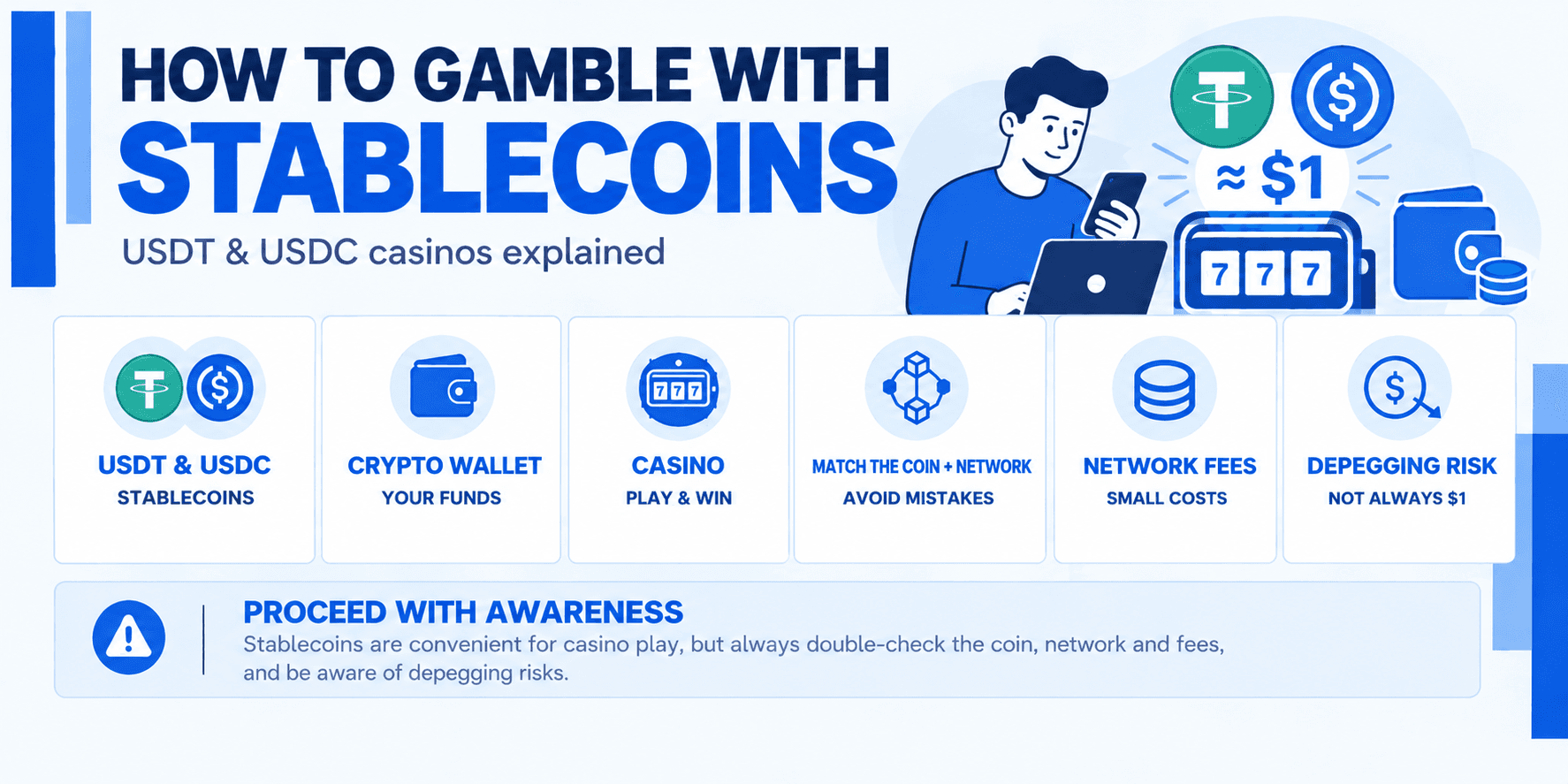
Stablecoin gambling is highly popular in 2026, with many players picking USDT and USDC over Bitcoin and other cryptos. Not having to worry about balance volatility is a big perk, but did you know that stablecoins aren’t always stable? This guide explains how to gamble with stablecoins, covering how they work, their benefits and risks, including depegging and what it can mean for your casino funds.
What Is a Stablecoin & How the Peg Works
Stablecoins are cryptocurrencies designed to stay pegged to the value of another asset, usually the US dollar. In this context, “pegged” means the respective stablecoin is intended to maintain a set value against that asset. Basically, for a dollar-pegged stablecoin, the goal is for 1 token to remain worth about $1.
The way the peg works depends on the type of stablecoin. For example, with fiat-backed stablecoins, the issuer holds reserves intended to back the tokens in circulation. When users redeem their tokens, they are removed from circulation, and the issuer uses its reserves to meet the redemption, helping support the stablecoin’s value.
Types of Stablecoins
Stablecoins fall into several broad categories:
Fiat-backed stablecoins
These are the most common model. Reserves may include cash and bank deposits, short-term US Treasury securities and, depending on the issuer, assets such as commercial paper. Tether (USDT) and USD Coin (USDC) are the best-known fiat-backed stablecoins.
Crypto-backed stablecoins
These use cryptocurrencies as collateral, typically holding more collateral than the value of the stablecoins issued to account for price fluctuations. For example, Ethena USDe is a synthetic dollar issued by the Ethena protocol.
Commodity-backed stablecoins
These are linked to commodities or other physical assets, such as precious metals (often gold), oil or real estate. Some popular examples of such stablecoins are PAX Gold (PAXG) and Tether Gold (XAUt).
Algorithmic stablecoins
These attempt to maintain their peg through mechanisms that adjust the token’s supply rather than relying primarily on conventional reserves. Frax (FRAX), for example, uses a fractional-algorithmic hybrid model.
The market is heavily concentrated in US dollar-denominated stablecoins, particularly USDT and USDC. The Bank for International Settlements (BIS) noted in an April 2026 speech that roughly 98% of stablecoins are denominated in US dollars.
Stablecoin vs Bitcoin & Other Cryptocurrencies
Stablecoins are often used for online gambling over Bitcoin and other cryptos mainly because they remove the biggest crypto risks: volatility. When you play with a dollar-denominated bankroll, it feels similar to playing with fiat; you always know how much your balance is worth, how much each bet is worth, and you don’t have to worry about last night’s win losing its value by morning. By contrast, with BTC, ETH, SOL and other altcoins, prices can move significantly over a short period. This affects the value of your balance and winnings even if you haven’t made a bet.
Also, with stablecoins, you may also have to pay lower fees than with Bitcoin and other cryptocurrencies. However, fees vary significantly based on the network you choose.
How USDT Compares to USDC for Online Gambling
While both USDT and USDC are designed to be close to the value of $1, they differ in who issues them, how their reserves are reported and which networks support them. Their casino support also varies.
As a crypto gambler, the main things you should know are that USDT is more widely supported at online casinos and is often available on more networks than USDC. This gives you more options when choosing how to deposit and withdraw, and you can save on fees.
Here’s a table overview of the main differences between USDT and USDC:
| Feature | Tether (USDT) | USD Coin (USDC) |
| Casino acceptance | Very high | High |
| Casino network support | Usually varied | More limited |
| Issued by | Tether Limited | Circle |
| Reserve reporting | Quarterly attestations | Monthly third-party assurance |
| Type | Fiat-backed | Fiat-backed |
| Launch year | 2014 | 2018 |

“I’ve noticed that at crypto-first casinos, USDT is often available on at least five networks, with some sites supporting it on more than 10. USDC usually doesn’t have the same range, and I’ve seen sites where it’s limited to ERC-20. I personally prefer cheaper networks like BEP-20, so I tend to skip USDC in favor of USDT.”
How Stablecoin Deposits and Withdrawals Work
You don’t need to be a crypto expert to know how to gamble with stablecoins. Making casino deposits and withdrawals with them is pretty straightforward. You generally don’t have to deal with extra details such as a destination tag or memo (required for XRP and XLM). Here’s how you can start gambling with stablecoins:
- First, you have to set up a crypto wallet and fund it with the stablecoin you want to use. Popular options include MetaMask, Exodus, Phantom Wallet and Base App.
- After that, pick a stablecoin casino, go to the cashier and initiate a transaction.
- Select the stablecoin and network you want to use, and make sure they match the ones you hold in your wallet.
- For deposits, send the funds to the wallet address provided by the casino. For withdrawals, enter your own wallet address.
- Review the transaction details and, if all looks correct, confirm it. Pay close attention to the wallet address and network, as well as the transaction amount.
Your funds should reach your casino account or crypto wallet within minutes. Transaction time depends on the network, the casino’s processing time and any internal casino security or KYC checks that may be required. The network fees you pay for stablecoin casino transfers depend on the blockchain and current network conditions. Plus, the casino operator may also charge its own fees, though this is relatively rare.
Main Stablecoin Risks at Online Casinos
If you want to learn how to gamble with stablecoins safely, you need to understand the risks involved. When you use stablecoins at online casinos, you face risks both from the stablecoin issuer and the casino you’re playing at. These are the main ones we’ve observed:
Centralized stablecoins rely on their issuers to keep enough reserves to back the tokens and process redemptions. Like money-market funds, they can face a run if large numbers of holders try to redeem their tokens at the same time. If the issuer cannot meet those redemptions quickly enough, it can put pressure on the stablecoin's value and potentially cause a depeg.
After funding your casino account, the operator has custody of your money. It may freeze your funds, reject withdrawal requests or become insolvent and unable to return your money. This is mainly a concern with shady or unlicensed sites, which may have little oversight and fewer consequences if they fail to pay players. We maintain a list of blacklisted casinos you might want to avoid.
Phishing sites can imitate legitimate casinos or crypto wallets to trick you into handing over login details or sending funds to a scammer. Always check the casino's URL before logging in or making a deposit, and never share your wallet's recovery phrase.
Sending a stablecoin to the wrong wallet address or using the wrong blockchain network, such as sending USDT via BEP-20 when the casino only supports ERC-20, can result in lost funds. Check that the casino supports both the stablecoin and network you’re using before making a deposit.
The amount of stablecoins that get credited to your casino balance may differ from the amount you send. Network fees can reduce the amount received, while conversion rates or spreads may apply if the casino converts your stablecoins into another currency.
The legality of online gambling with stablecoins varies significantly by jurisdiction. You should always check whether crypto gambling is legal where you live and whether the site you want to play at can legally accept players from your country. You may also have to pay taxes on your gambling winnings, even if the casino is licensed offshore and doesn’t provide you with a tax form.
Stablecoin Depeg: How & Why Prices Change
A stablecoin can depeg when its market price moves away from its intended 1:1 value against the underlying asset. When this happens, the value of funds held in a stablecoin falls. For example, if you hold $1,000 in USDT and it falls to $0.90, your balance is worth $900 until it recovers its peg.
Depegging can happen for a variety of reasons, including:
- Market conditions: Sudden changes in demand can push a stablecoin away from its target, especially when there’s not enough liquidity to fill orders.
- Insufficient collateralization: Stablecoins with insufficient or inaccessible reserves may be more vulnerable during periods of market stress.
- Technical issues: Bugs in smart contracts or other technical failures can interfere with a stablecoin's mechanism for maintaining its peg.
- Regulatory or infrastructure events: Regulatory action or blockchain network congestion can also contribute to a depeg.
Now, a depeg may be temporary, and stablecoins can return to their target value. This happened with USDC in March 2023, when it recovered its $1 peg after briefly falling as low as $0.87. However, some stablecoins have collapsed completely after depegging. For example, TerraUSD (UST) lost its peg in May 2022 and fell to almost zero as confidence in its stabilization mechanism disappeared.
Regional Regulatory Frameworks About Stablecoins
Stablecoin regulations can affect which coins you can buy, sell and use for online gambling. Rules around reserves, redemption and disclosures are designed to reduce risks for stablecoin holders. However, they don't guarantee that a stablecoin will always stay pegged to $1. They also don't determine whether online gambling with stablecoins is legal where you live.
Here are two broad examples of regulatory frameworks around stablecoins:
Europe (EU)
MiCAR sets requirements for stablecoin issuers covering areas such as authorisation, reserves and redemption rights. If a stablecoin doesn't meet the applicable requirements, EU-regulated crypto platforms may stop supporting it, which can make it harder for you to buy or transfer.
United States (US)
The US passed the GENIUS Act in July 2025, creating a federal framework specifically for payment stablecoins. The basic idea is: if a company wants to issue a regulated payment stablecoin in the US, it has to follow rules designed to make sure the token is actually backed and can be redeemed

“I strongly recommend that you check whether online gambling with cryptocurrencies is legal in your country or state before playing with them. CryptoCasinos.com cannot provide you with legal advice. Also, regulations may change over time, so it’s safer for you to get current information from official sources.”
Is Stablecoin Gambling Right for You?
Whether you should engage in stablecoin gambling really comes down to your personal preferences. Stablecoins remove the usual volatility associated with cryptocurrencies like Bitcoin and are widely accepted at online casinos. However, they aren’t 100% stable and don’t remove the other risks of crypto gambling, including issuer, casino and legal matters.
To keep yourself safe, we recommend that you only deposit stablecoins into trusted casinos. Before depositing, check the casino’s license, supported networks, fees and terms, and only gamble with money you can afford to lose. If you need some help staying in control, use responsible gambling tools or reach out to dedicated organizations like GamCare and Gamblers Anonymous.
FAQS About Stablecoin Gambling
Are stablecoins safe?
Is USDT or USDC safer for gambling?
How does stablecoin volatility work?
Which stablecoin network has the lowest fees?
What are the top 3 stablecoins for online gambling?
How can you buy stablecoins?

Andreea has 5+ years of experience in the iGaming industry, specializing in crypto casino reviews, casino software developers, regulatory compliance, and responsible gambling.